
Visual Symphony (VS) is the artistic collaboration of conductor Tibor Bogányi and visual artist Ágnes Zászkaliczky, reimagining the concert experience for the 21st century. Visual Symphony’s mission is to bring classical music to a wider public, inspiring audiences far beyond traditional concert halls. By fusing classical music with cutting-edge visual technology and contemporary dance, Visual Symphony creates multi-sensory productions that transform each performance into a living, cinematic experience.
Carmina Burana 3D
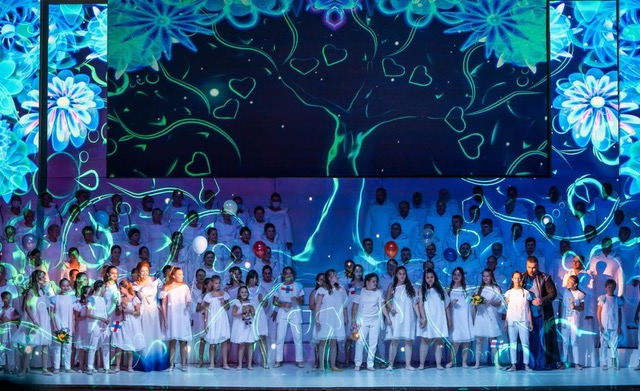
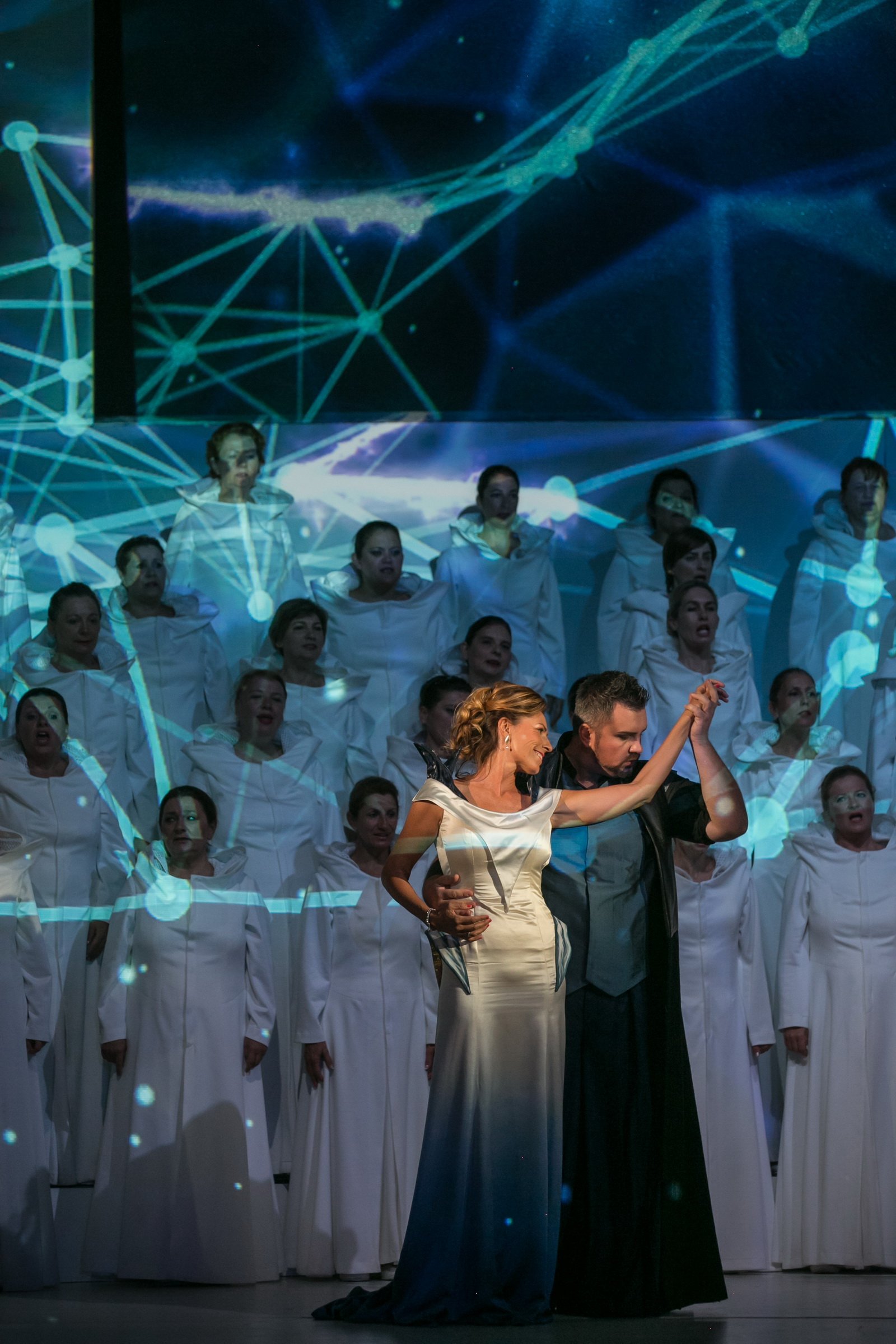
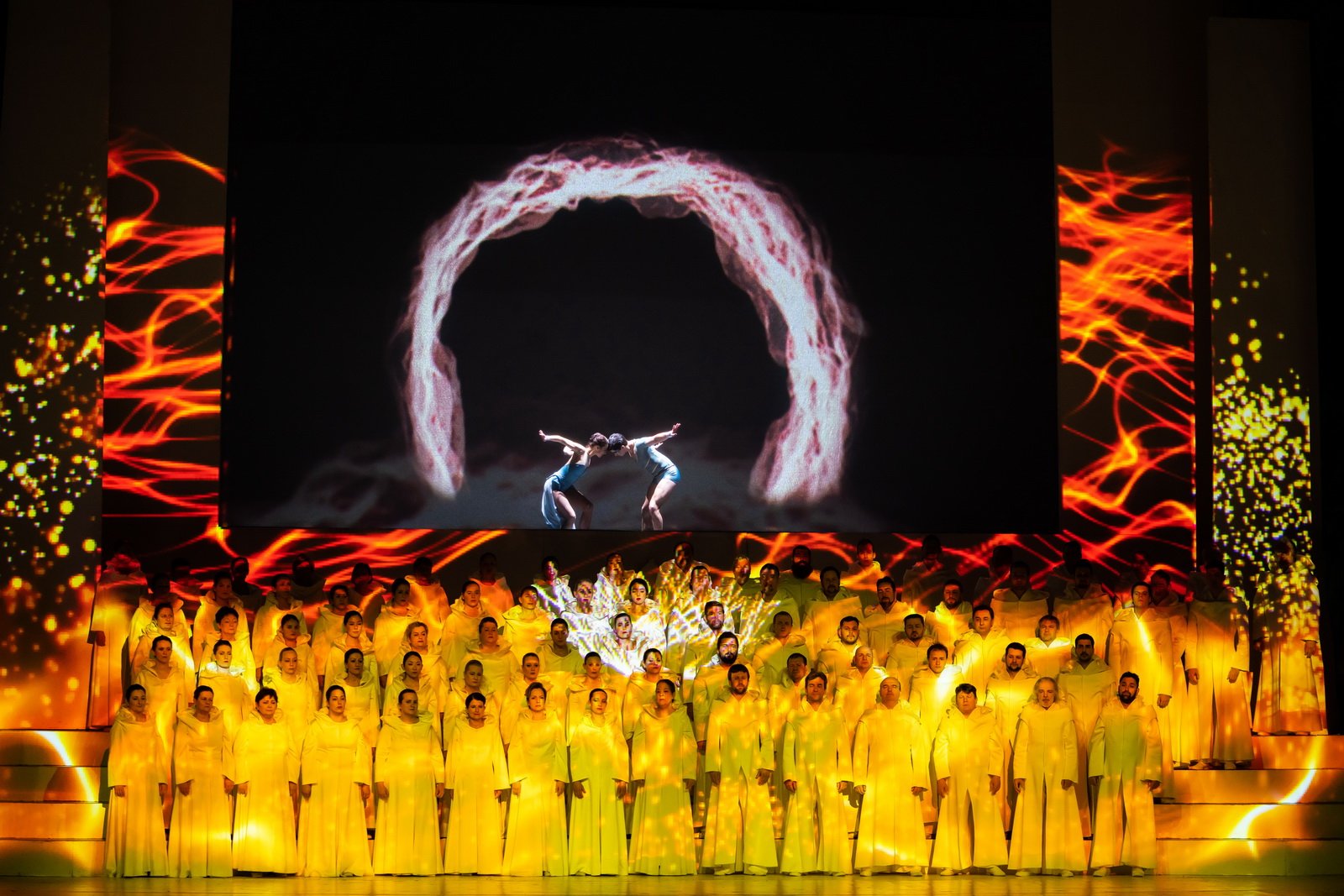
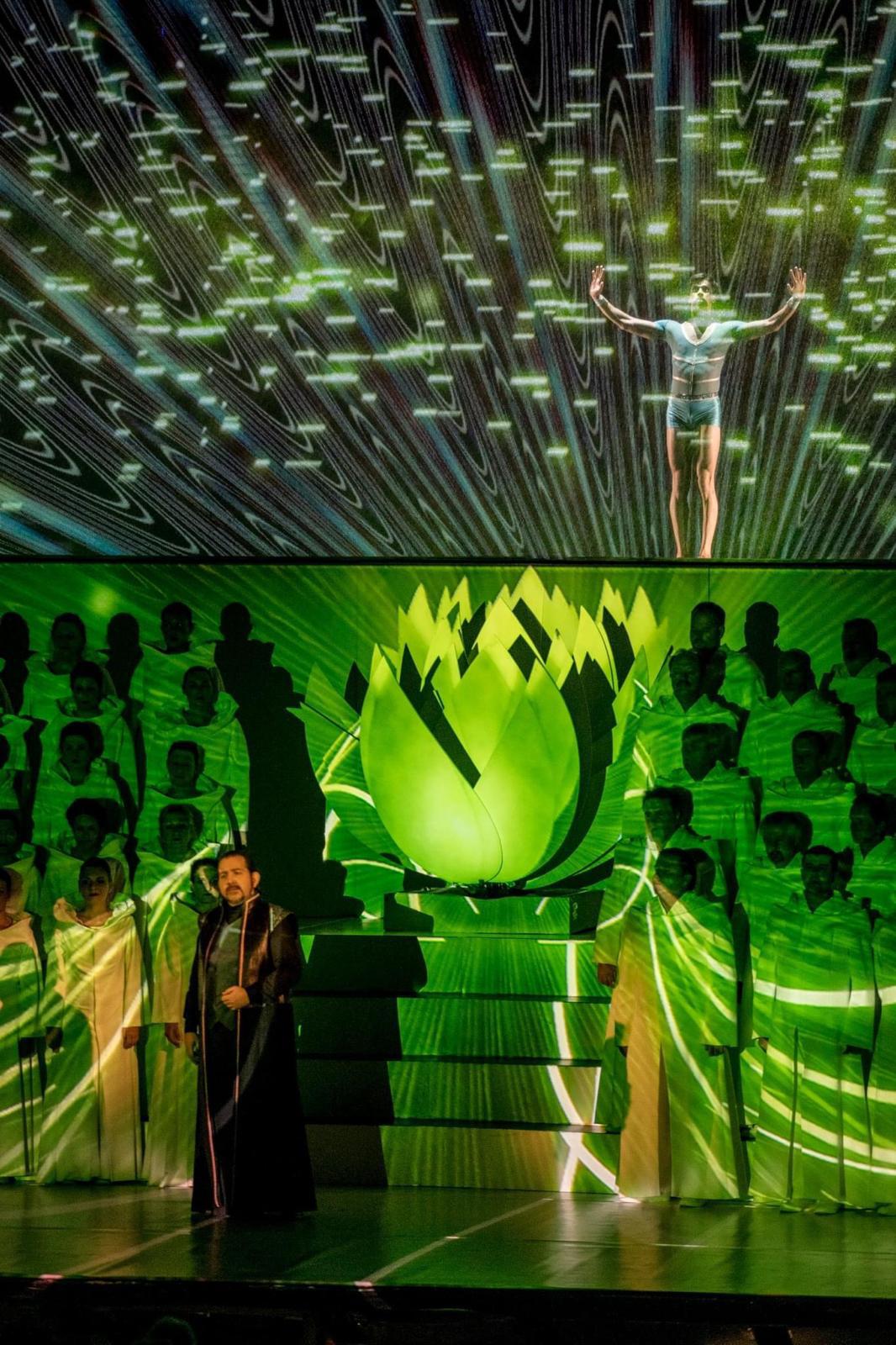
This production was born to open the doors of wonder to the large audience of all generation. By the 3D
interactive projection and the new artistic concept, the audience is enchanted with dazzling visuals to the magical world of Carl Orff.
The production works with such primal symbols which exist both in the Hungarian and in the universal
symbolism, such as the Tree of Life, the Lotus flower, the Phoenix, the Sun and Moon motives.
Orff exceptionally vividly follows and expresses the message of the songs in his music. The “magical pictures” were sorted out on the basis of his original concept which strengthen but not suppress the effect of music and not illustrate but deepen the lyrics.
“Over the course of the many times I have conducted the work, I gradually developed a vision for a staged version. My aim was to show the audience the visions and the rich inside world I have during conducting this music. Classical music is difficult to complement with visual images that do not put music out of focus. So we turned it to the other way around: it is a live concert spiced with real time visual elements and interactive dance.”
Photo Gallery
Carmina_Burana_3D_01_©Győrplusz_Média_©MekliZ_Fotóstúdió_©Visualsymphony
Picture: Győrplusz Média, MekliZ Fotóstúdió and Visualsymphony
Download available
Carmina_Burana_3D_02_©Győrplusz_Média_©MekliZ_Fotóstúdió_©Visualsymphony
Picture: Győrplusz Média, MekliZ Fotóstúdió and Visualsymphony
Download available
Carmina_Burana_3D_03_©Győrplusz_Média_©MekliZ_Fotóstúdió_©Visualsymphony
Picture: Győrplusz Média, MekliZ Fotóstúdió and Visualsymphony
Download available
Carmina_Burana_3D_04_©Győrplusz_Média_©MekliZ_Fotóstúdió_©Visualsymphony
Picture: Győrplusz Média, MekliZ Fotóstúdió and Visualsymphony
Download available
Magic of Vivaldi
https://magicofvivaldi.com/en/home/
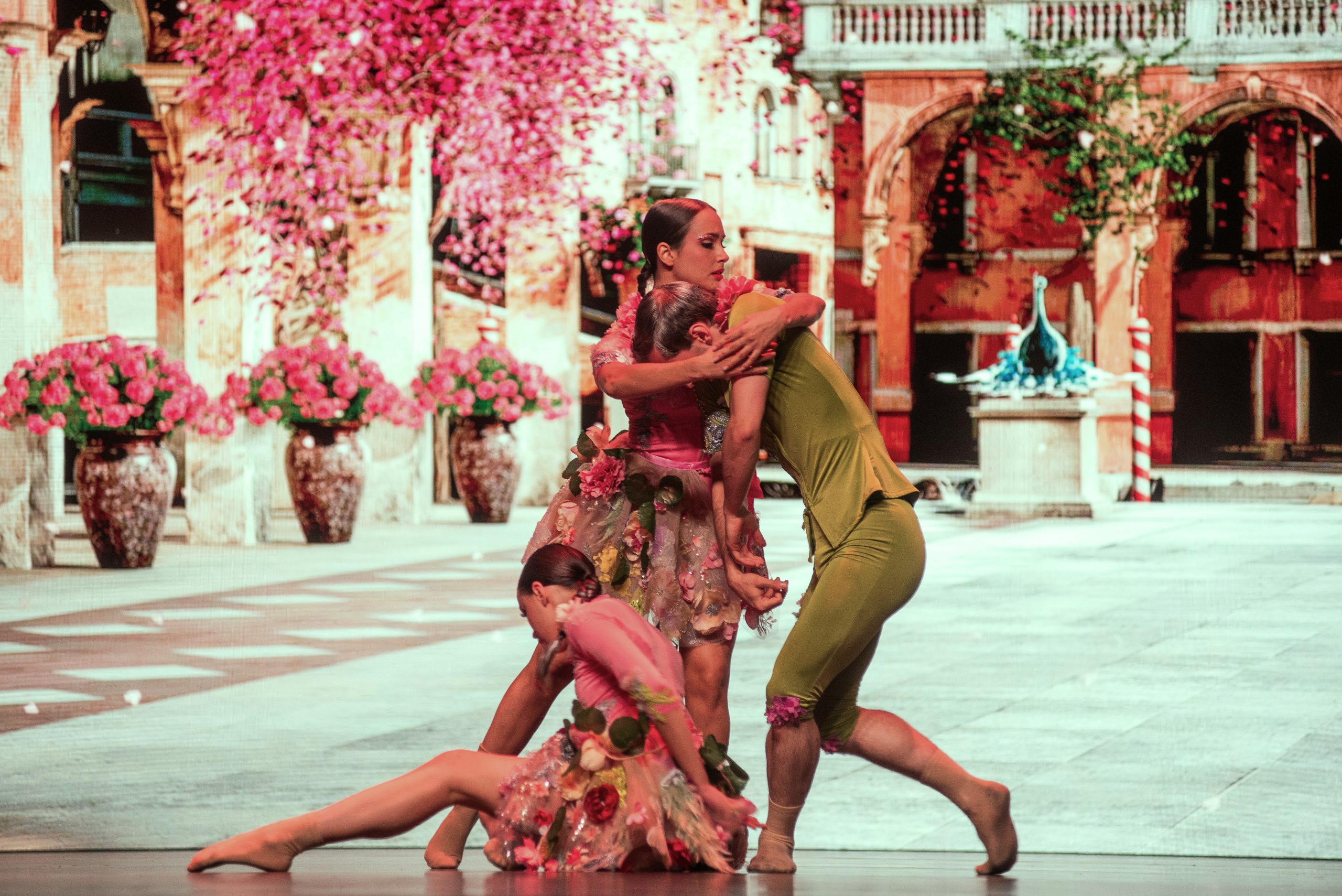
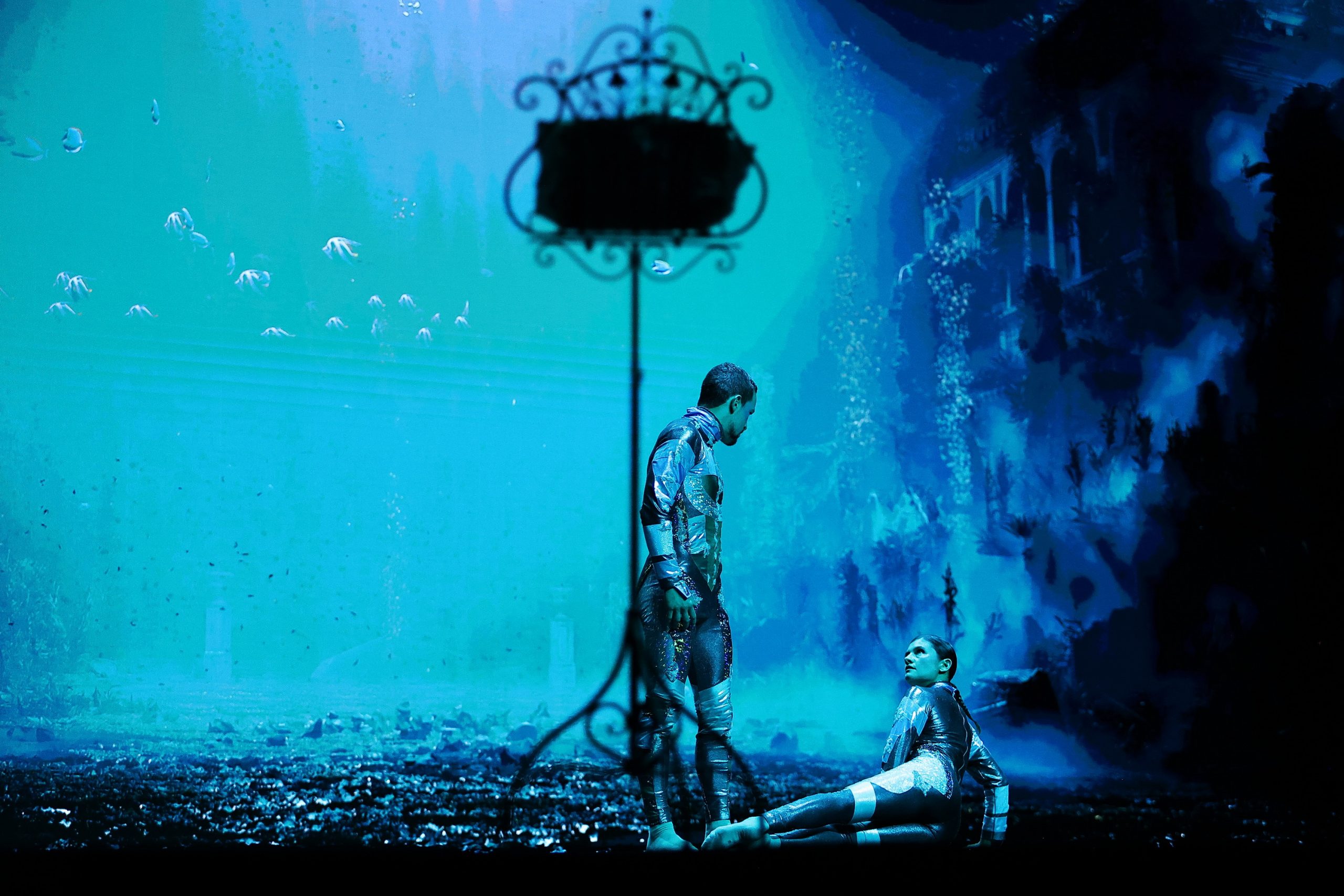
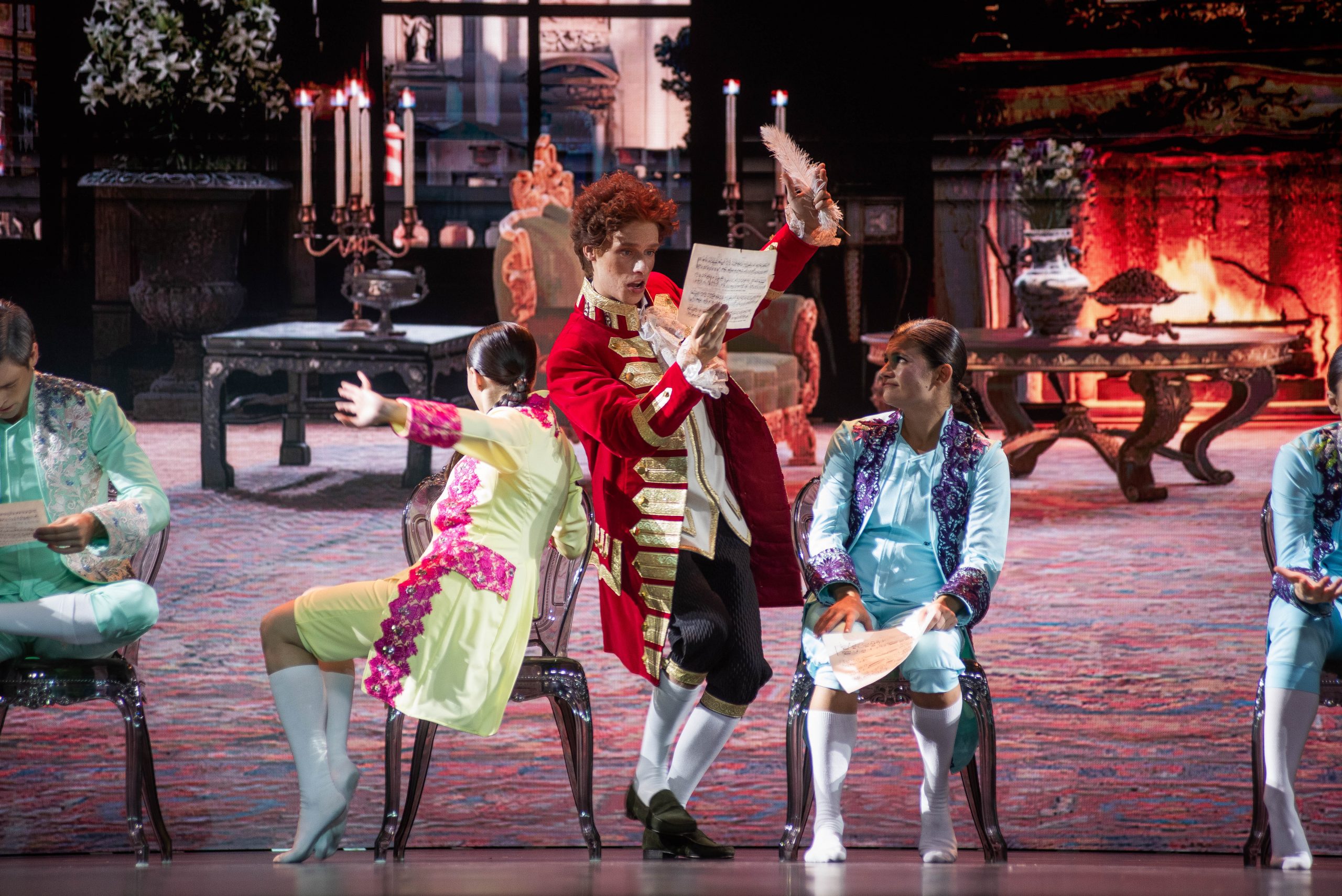
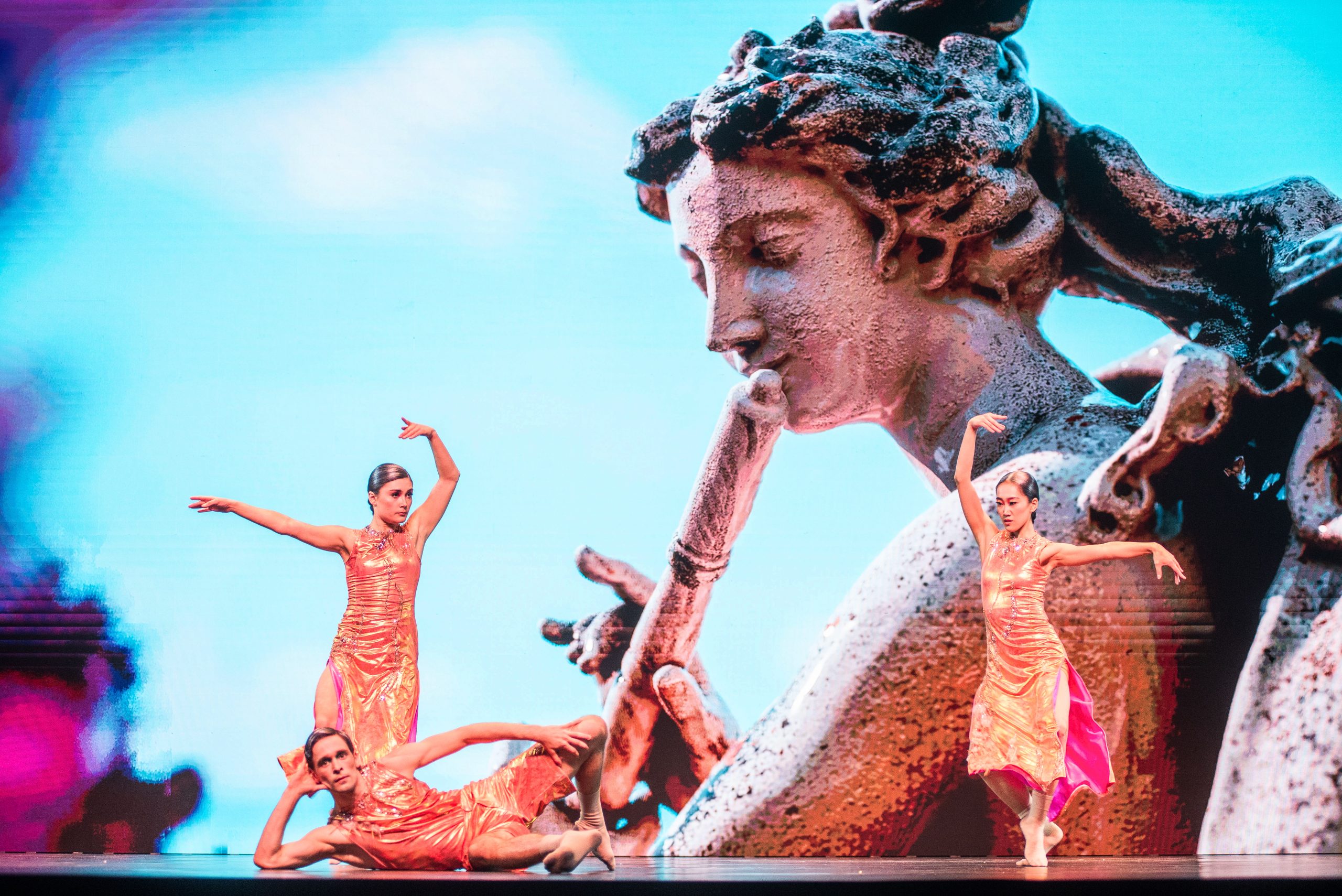
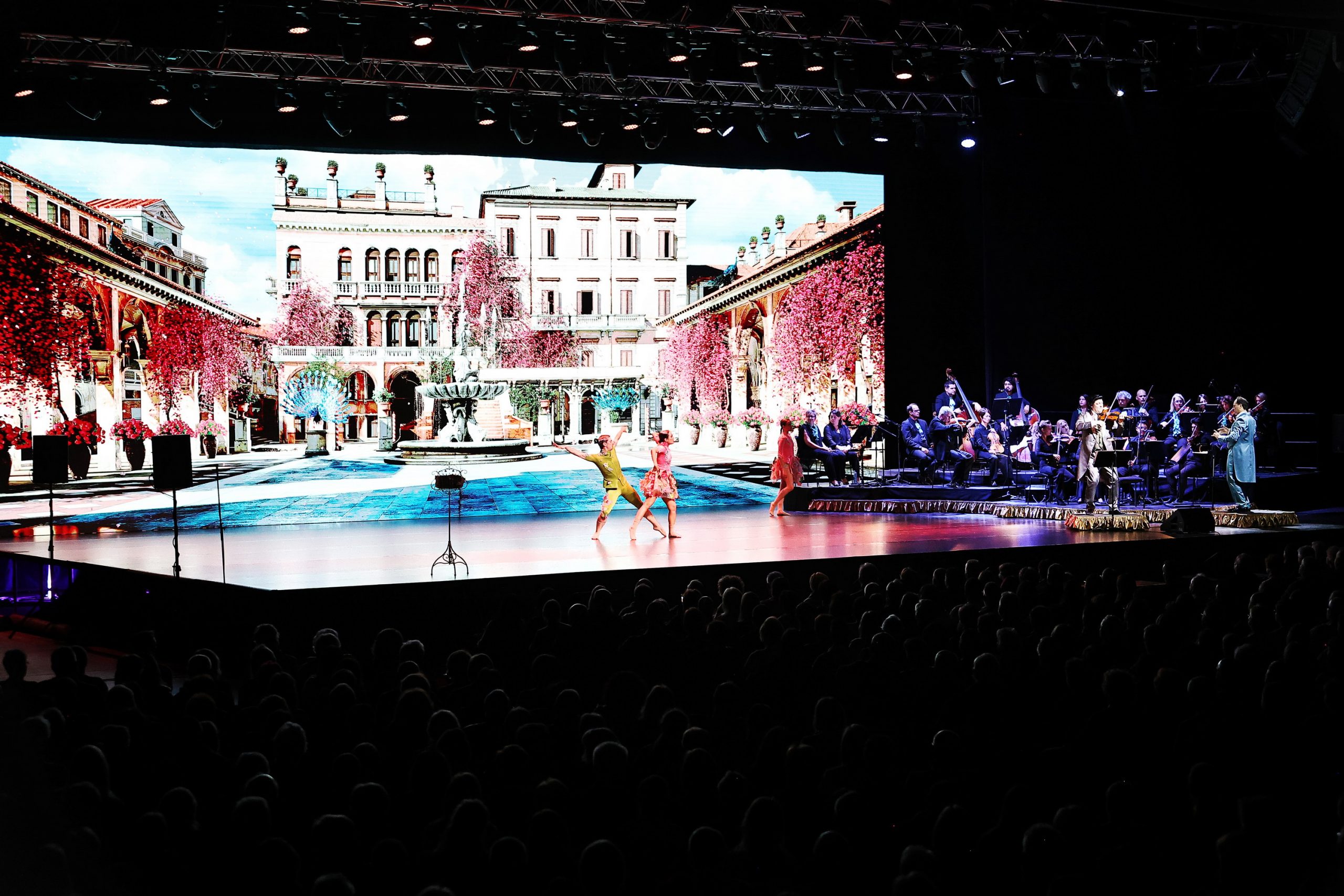
The Magic of Vivaldi – The Four Seasons is not just a concert, but a multi-sensory artistic experience. Real-time projection technology, digital sets, and moving visuals deepen the musical effect, while the dancers of the Budapest Dance Theatre bring the power of the music to life.
Music, visuals, and movement reveal the timeless layers of Venice and Vivaldi’s timeless masterpiece in harmonious unity – with an intensity never seen before.
The Four Seasons is to faithfully interpret Antonio Vivaldi’s iconic work while offering a new, innovative perspective for those open to expanding the boundaries of classical music.
The live orchestral performance is complemented by the most modern projection technology, digital sets, and animated visuals. This makes the concert experience both traditional and progressive at the same time – preserving musical values while speaking the language of a contemporary audience.
Magic of Vivaldi was produced in collaboration with the Győr Philharmonic Orchestra.
Photo Gallery
Magic_of_Vivaldi _01_©Győrplusz_Média_©MekliZ_Fotóstúdió_©Visualsymphony
Picture: Győrplusz Média ,MekliZ Fotóstúdió and Visualsymphony
Download available
Magic_of_Vivaldi_02_©Győrplusz_Média_©MekliZ_Fotóstúdió_©Visualsymphony
Picture: Győrplusz Média ,MekliZ Fotóstúdió and Visualsymphony
Download available
Magic_of_Vivaldi_03_©Győrplusz_Média_©MekliZ_Fotóstúdió_©Visualsymphony
Picture: Győrplusz Média ,MekliZ Fotóstúdió and Visualsymphony
Download available
Magic_of_Vivaldi_04_©Győrplusz_Média_©MekliZ_Fotóstúdió_©Visualsymphony
Picture: Győrplusz Média ,MekliZ Fotóstúdió and Visualsymphony
Download available
Magic_of_Vivaldi_05_©Győrplusz_Média_©MekliZ_Fotóstúdió_©Visualsymphony
Picture: Győrplusz Média ,MekliZ Fotóstúdió and Visualsymphony
Download available
Ágnes Zászkaliczky was born in Budapest, Hungary. As a professional musician and painter, Zászkaliczky’s artistic work displays a deep connection to classical music. Since 2008, she has also been creating visual designs for performances of large-scale musical productions. These projects include the special performance of Carmina Burana 3D by the Hungarian State Opera in the autumn of 2018, where Ágnes Zászkaliczky and Tibor Bogányi were artistic directors. Together they have been working in the last 15 years to expand the audience of classical music events by enriching concert venues with unique visual experiences. They curated the Carmina Burana 3D production , which was created with the world-famous Budapest-based Freelusion Studio.
Her classic portraits are made using traditional methods blended with abstract geometric designs in the background. A tactile sense of rhythm is created through the contrasting elements of her pieces. She is particularly interested in portraits of musicians. Zászkaliczky also works as an illustrator; her works include the book Cifra Palota – 100 Hungarian Children’s Songs published by Rózsavölgyi Publishing House and the cover design of the book Türk: Childhood years.
Having grown up in a family of artists, music played a leading role in Ágnes Zászkaliczky’s early life. Her father, Tamás Zászkaliczky, is a famous Bach researcher and organist, while her mother, Ágnes Lakos, is a piano teacher. She started playing piano at the Tihamér Vujicsics Music School in Szentendre at the age of six and was subsequently admitted to the organ department of the Béla Bartók Secondary School of Music. At the school, she was taught organ by Lilla Szathmáry and Gábor Csalog taught her piano. From 1998 to 2004, she was a student at the Salzburg Mozarteum in Daniel Chorzempa’s famous master class, graduating in 2004 with a degree in organ. Since 2006 she has been the artistic director of the Oradea International Organ Festival. 2007 brought the release of her first album, in which she and Tibor Bogányi perform pieces written for organ and cello.
Drawing and painting have always been present in her life. At the age of five, she became a member of the Creative Children’s Workshop in Szentendre, where her first teachers were Jenő Zaszlavik and János Aknay. Beginning in 2009, she was taught painting from the masters of the Repin Academy in St. Petersburg. Her first solo exhibition was opened in Szentendre in 2001, and since then she has held exhibitions across Europe and the Americas, including in Budapest, Vienna, Helsinki, and Palm Beach. Since 2016, she has been a member of the National Association of Hungarian Artists. In 2021 she received an award for Best People in the NOAPS (National Oil & Acrylic Painters´ Society) International Spring Exhibition, USA.
Tibor Bogányi’s performances are hallmarked by artistic diversity and virtuosic interpretation. In 2002, while still in his twenties, he became principal conductor of the Turku Symphony Orchestra, remaining in the role until 2006; from 2008 to 2014 he was chief conductor and artistic director of the Lappeenranta City Orchestra, and from 2018 to 2024, chief conductor of the Pori Sinfonietta. From 2011 to 2023 Bogányi was chief conductor of the Pannon Philharmonic of Pécs – he is now its’ principal guest conductor. In addition, he has conducted the Helsinki Philharmonic Orchestra, Finnish Radio Symphony, Lahti Symphony and Tampere Philharmonic Orchestra, and in 2006 made his first appearance with the Finnish National Opera.
Now based in Vienna, Tibor Bogányi conducts regularly at the city’s Musikverein and Konzerthaus. In addition to orchestras from his home countries of Hungary and Finland, he has conducted such ensembles as the Bochumer Symphoniker, Bruckner Orchester Linz, Copenhagen Philharmonic, Saint Petersburg Symphony, Staatsphilharmonie Rheinland-Pfalz, Orchestre National du Capitole de Toulouse, Mexico State Symphony, Tonkünstler Orchester Niederösterreich and Kwa Zulu-Natal Philharmonic.
Established as a distinguished cellist and conductor, he forged a new path in 2018 as director of a spectacular multimedia production of Carl Orff’s Carmina Burana. In 2025 Bogányi again teamed up with visual artist Ágnes Zászkaliczky, this time in collaboration with Hungary’s Győr Philharmonic Orchestra, to launch Magic of Vivaldi: The Four Seasons.